
16 Most Popular Packaging Materials Used in Custom Boxes & Product Packaging
If you’ve ever thought that packaging is “just a box” to put your products in, we suggest you spend a few minutes unboxing a really well-designed premium product. When you pay attention, you’ll start to notice the material, the feel, the finish, and the little details on the surface. All of these elements work together to tell a story before the customer even touches what is inside.
That is why choosing the right packaging material is so important.
In this guide, we will walk through 20 popular materials, finishes, and add-ons that brands use to create custom boxes and premium product packaging. Let’s get started.
Core Paperboard and Box Materials
Following are the most commonly used and durable custom packaging materials in the market:
1. SBS C1S
SBS C1S is a premium white paperboard with a coating on only one side. The coated side is smooth and perfect for printing sharp and vibrant graphics for your package design. If your products fall into the retail packaging category or need high-quality and clean-looking prints, then SBS C1S is the one for you.
2. SBS C2S
SBS C2S is also a premium paperboard, but it has both of its sides coated, which means the inside of the box looks just as polished as the outside. This is a great pick for luxury packaging, beauty products, or any brand that needs to pay attention to presentation from every angle.
3. White Kraft Paperboard
White kraft is made from recycled material and has a strong, tear-resistant structure. It is also moisture resistant, which makes it practical for everyday use. It still looks neat and clean, which is great if you want eco-friendly packaging without losing that fresh, branded look.
4. Natural Brown Kraft Paperboard
Natural brown kraft is the material most people think of when they picture earthy, sustainable packaging. It has that warm brown tone and a raw, chemical-free feel. It is fully recyclable and perfect if your brand leans eco-conscious, organic, or sustainable.
5. Black Kraft Paperboard
Black kraft gives instant drama and style. It is also made from recycled materials. It is a strong and durable packaging material whose dark tone gives your product a bold, high-end look.
6. Textured Paper Stock
Textured stocks have a surface you can feel. Instead of being flat and smooth, they might feel woven, linen-like, or subtly patterned. Textured paper is great when you want the box to feel premium right from the first touch.You’ll often see this material in luxury soap boxes, boutique products, and gift sets.
7. Metallic Cardboard
Metallic cardboard has a shiny, reflective finish built right into the material. It is perfect for packaging that needs visual punch, like makeup or accessory packaging. It also works well for moisture-sensitive products because of its coated surface.
8. Holographic Cardboard
Holographic cardboard brings that color-shifting, almost 3D effect that changes in the light. It’s playful, bold, and perfect for brands that want to make a strong first impression. If your brand is trendy, expressive, or aimed at a younger audience, this is a fun way to stand out without complicated design work.
Add-On Options That Transform Your Packaging
These finishes don’t change the structure of your box, but they make a big difference in how it looks and feels. Adding one of these can take a basic box to something high-end.
9. Foiling
Foiling adds metallic detail to parts of your design. It used gold, silver, rose gold, and other metallic shades to make logos and accents pop. On dark stocks like black kraft, foiling looks especially striking since it gives the packaging a luxurious, polished feel.
10. Embossing
Embossing raises your design up from the surface. You can feel it when you run your fingers over it. This works beautifully for logos and key brand elements and makes the packaging feel thoughtful and more expensive.
11. Debossing
On the opposite end, debossing presses the design into the material. It feels engraved and subtle and pairs especially well with textured or matte stocks.
12. Spot UV
Spot UV puts a shiny coating on specific parts of your design. You might leave the rest of the box matte and make just bits of the packaging (i.e., the logo) glossy. The contrast creates depth and focus, and it looks really sharp.
Finishing Options
Finishes sit on top of the material and print, changing how the whole box feels. These choices affect how colors look, how smooth the surface is, and what the packaging feels to the touch.
13. Gloss Finish
A gloss finish makes colors shine and look vibrant. It reflects light and draws attention. This finish works well on SBS boards and metallic cardboards, especially when you want lively, bold graphics.
14. Matte Finish
Matte finishes give a soft, flat look with no shine. It feels modern, minimal, and premium. Many luxury and beauty brands love matte because it looks calm and confident rather than loud.
15. Soft Touch Finish
Soft touch finish feels almost velvety when you hold it. It gives packaging a gentle, premium feel that customers remember. It’s a good choice for luxury products like cosmetics, jewelry, or boutique items.
16. Pearlescent Finish
Pearlescent finishes add a soft shimmer across the whole surface. It is delicate, elegant, and a little dreamy. The effect works beautifully for boutique products, skincare, and special edition packaging.
How To Choose The Right Material For Your Packaging
There is no single “best” material. The right one depends on:
- The weight and type of product
- How premium or natural you want the box to look
- How much print detail you need
- Whether you want texture or smoothness
- Your budget
- Your brand personality
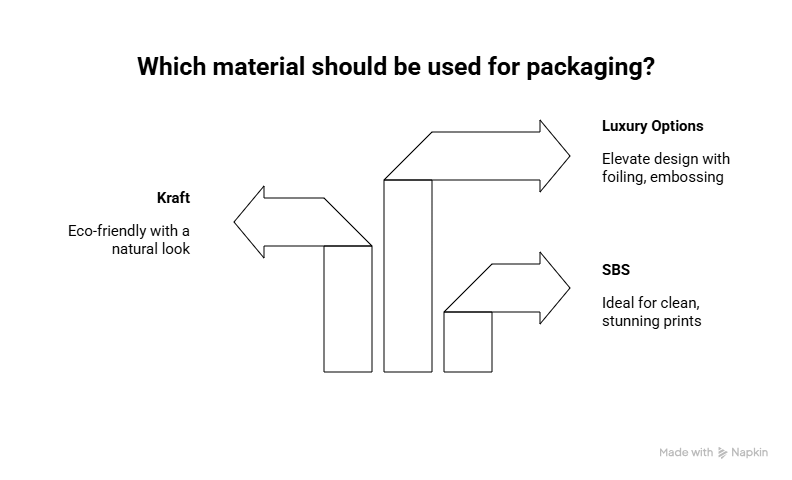
If you want a clean canvas for stunning prints, SBS is a great fit. If you want something eco-friendly with character, kraft might be the one. If your goal is luxury, adding foiling, embossing, or soft touch can instantly elevate the design without changing the box shape at all.
Final Thoughts
The packaging materials you choose shape how your customers see your brand before they even open the box. Take a moment to consider not just how your packaging looks in photos, but how it feels in hands, how it reflects your values, and how it matches your product. When you choose materials thoughtfully, your packaging becomes part of the experience instead of just a container.
Need Help Picking The Right Material?
If you want packaging that feels exactly right for your brand, Blue Box Packaging can help you choose the best material, finish, and add add-ons for your custom boxes. Tell us about your product, your style, and your goals, and we will guide you through the options so your packaging looks as good as what is inside.

James Clark
James is a senior editor, expert in the packaging industry. With a keen eye for detail and industry expertise, he crafts engaging narratives that explore the latest trends and innovations in packaging design and sustainability.