
How to Assemble Custom Boxes Like a Pro
Custom boxes look great when they are folded cleanly, lined up neatly, and finished with a smooth shape. But if the folds are messy or the edges pop open, the whole package can feel a little off. The good news is that assembling custom boxes is much easier than it looks. All you need to know are a few simple steps, and you’ll be able to put any kind of box together. In this guide, we’ll break the whole process down for you. Let’s get folding!
Why Do You Need To Know How To Assemble Boxes Properly
It might seem like “just folding a box,” but the way you assemble it actually affects a lot of things, like:
- How strong the box is
- How well it protects your product
- How neat and professional it looks
- How consistent your packaging feels as a brand
A well-assembled box feels sturdy, closes smoothly, and looks clean. A badly folded one can bulge, pop open, or just look untidy, which can end up impacting your product appeal.
Get Your Space Ready First
First things first: Find a clean, flat surface to work on. A table or counter works great. Wipe away any dust or crumbs so nothing scratches or sticks onto your box finish.
Lay your flat box down and take a second to look at it. You’ll see faint crease lines already pressed into the board. These are called score lines. They show you exactly where the box should bend, which makes folding much easier.
If you want to keep things extra secure, you can also have some packing tape nearby. Not every box style needs it, but it is handy to have just in case.
How Your Custom Boxes Arrive
Most custom boxes arrive flat for a reason. Flat packing:
- Saves storage space
- Reduces shipping cost
- Keeps the box edges crisp
- Prevents dents and crushing
So when you open the stack and find flat cardboard, don’t worry. They’re meant to look like that. All the structure is already built into the design, waiting for you to start folding.
Assembling a Standard Product Box
This type is the most common box you’ll see for retail products, skincare, candles, small accessories, and more.
Here is how to put one together step by step.
Step 1: Fold Along the Crease Lines
Start by gently pre-folding all the score lines. You don’t need to press hard; just guide the cardboard along each bend so it loosens up a bit. This makes the later steps much smoother. It helps if you use a straight scale against the score lines to make crisp folds.
Step 2: Form the Main Shape
Lift the long side panels upward so the box begins to look like a box instead of a flat sheet. You’ll see the smaller side flaps attached near the bottom.
Step 3: Secure the Bottom
Fold in the small bottom flaps first. Then fold the larger bottom flap over them.
Some boxes have a locking tab that tucks into a slot; others may be secured with a bit of tape. If you’re packing heavier items, adding tape along the seam is always a good idea.
Step 4: Close the Top When You’re Ready
Now’s the time you put your product inside and fill the box with any cushioning you might want to add. Once done, close the top flaps in the same way. If your top has a tab closure, slide it gently into place.
That’s it. Simple and done.
How to Assemble a Mailer-Style Box
Mailer boxes are the cute, sturdy ones many brands use for shipping and subscription packaging. They’re designed to lock together securely without needing tape in most cases.
Here’s how to assemble one smoothly.
Step 1: Pre-Fold Everything
Just like before, fold along every score line first. This gets the cardboard moving in the right direction.
Step 2: Fold the Side Walls Up
You’ll notice the inside walls have tabs. Fold them up and inward so they sit neatly inside the box.
Step 3: Lock the Tabs In
Most mailer boxes have tabs that tuck neatly into slots at the front. Gently guide them in. If they resist, don’t force them. Just realign and try again.
Step 4: Fold the Lid Over
Once filled, fold the lid down and secure the front locking flap.
Assembling a Shipping Box
Shipping boxes are usually bigger and built for heavier items, so the tape does most of the work. The goal is to keep the base strong and the top secure so nothing shifts around during transit.
Here’s an easy step-by-step way to do it:
- Open the flat box so it pops into a square or rectangle.
- Push the corners out so the sides sit straight.
- Fold the two smaller bottom flaps in first, then the larger ones.
- Tape along the center seam on the bottom.
- If the product is heavy, add a second strip of tape over the first one, then one or two strips across the width for extra strength.
- Place your item inside and add padding so it cannot move around.
- Fold the top flaps in the same way and tape the seam closed.
- Press the tape down firmly so it bonds well.
Give the Box a Quick Final Check
Before you stack or ship your box, do a quick check.
Look for:
- Straight edges
- Clean corners
- Tabs fully locked
- No bulging
- No creases on the front panel
Run your fingers over the edges to smooth them down. A neat finish always feels more professional.
Reinforcing Your Boxes
If your product is fragile, glass, heavy, or oddly shaped, a little reinforcement brings peace of mind.
You can:
- Add extra tape to the base
- Include an insert or divider
- Use void filler like tissue paper or shredded paper
- Double tape the center seam for heavier loads
This keeps your products safe and snug during transit.
Common Mistakes to Avoid
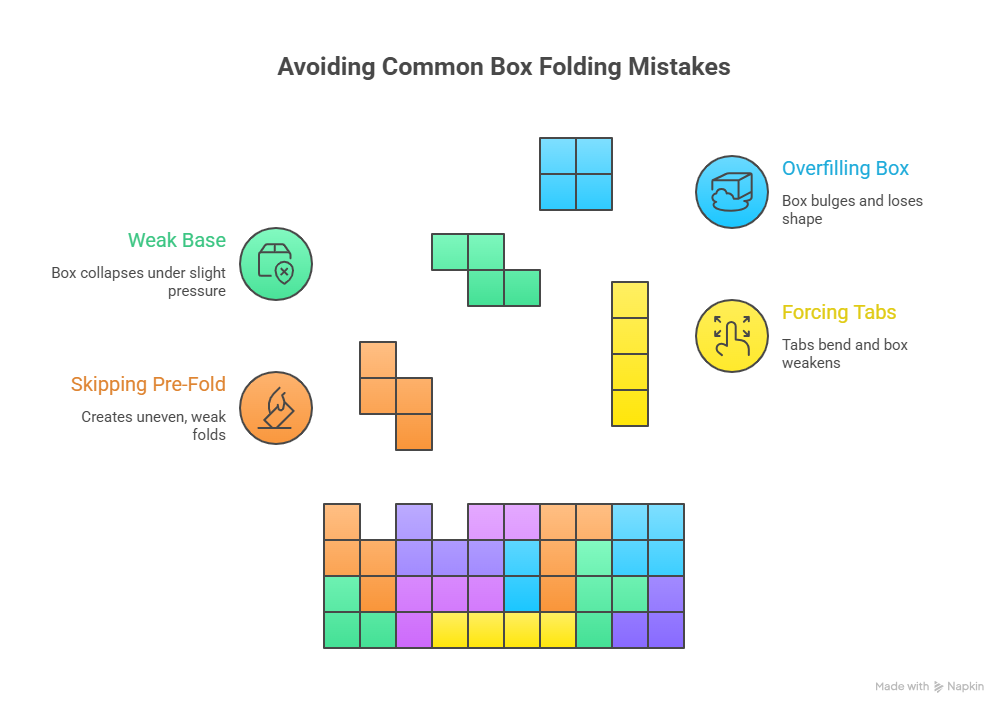
Here are a few easy-to-avoid issues:
- Skipping the pre-fold step
- Forcing tabs instead of guiding them
- Leaving the base weak
- Overfilling the box so it bulges
A neat, properly shaped box always feels more premium in the customer’s hands.
Want Custom Boxes That Are Easy to Assemble?
If you want boxes that look beautiful, feel sturdy, and fold together smoothly, Blue Box Packaging has you covered. Our custom boxes are designed with clean scoring, strong structures, and premium finishes that make assembly simple and satisfying.
Ready to get started?
Reach out to Blue Box Packaging, and let’s create custom boxes your customers will love opening.

James Clark
James is a senior editor, expert in the packaging industry. With a keen eye for detail and industry expertise, he crafts engaging narratives that explore the latest trends and innovations in packaging design and sustainability.