
Packaging Mistakes That Are Costing E-Commerce Brands Repeat Customers
Most e-commerce brands put most of their focus and budget on ads, product pages, and checkout flow. Packaging often ends up being the last thought in between all of this. They think of packaging as nothing more than something that holds the product, and without realizing it, this mindset is costing them repeat customers.
In this guide we’re going to look at all things packaging that e-commerce brands miss out on and mistake, causing them customer loyalty.
Using Boxes That Are Too Big for the Product
One of the most common mistakes you’ll see in e-commerce packaging is its size. When you order a smaller-sized product online, but it comes floating and shaking around in a huge box, it automatically sets a bad impression.
When the packaging isn’t set to size, it causes:
- The product to shift around during shipping
- Use of extra filler
- Shipping costs to increase
- The unboxing to feel unpolished
Your customers expect packaging to fit the product it is for. When it does not, it signals poor planning from the brand. Over time, this perception affects customer trust and repeat purchases.
Poor Protection That Leads to Damage
Nothing kills repeat business faster than damaged products. Thin boxes, weak corners, or low-quality materials fail during shipping more often than brands expect.
Even minor damage can cause loss. A dented box or scratched product can be costly. Customers may expect a replacement, but even that won’t fix the bad first impression.
Packaging needs to be designed for all sorts of shipping conditions. That includes stacking, drops, pressure, and long transit times.
Overcomplicated Packaging
Some brands try to impress their audience by adding too many layers, seals, and inserts. Instead of feeling premium, the experience becomes annoying.
Customers do not enjoy struggling to open packaging. Excessive tape, unnecessary wraps, or confusing layers turn excitement into irritation.
Good packaging feels intuitive. It opens smoothly. It protects the product without making the process frustrating. Simplicity often delivers a better experience than complexity.
Inconsistent Packaging
Regular, generic packaging isn’t made to fit each and every one of your products, which may cause you to change sizes or styles for different items. This can bring inconsistency in your packages.
Inconsistent packaging can make the consumer wonder:
- Is the brand cutting corners?
- Was this product handled differently?
- Is quality slipping?
Repeat customers expect a familiar experience every time. Your packaging needs to be consistent and aligned with the brand for every product. Consistent branding offers reliable presentation that customers can recognize and trust.
Ignoring Sustainability
Sustainability is a growing trend in e-commerce. It’s not just a trend but a growing demand now. Many customers care about how the packaging of products impacts the environment. Too many layers or excessive packaging does the opposite of charming a customer in.
Packaging that has:
- Too much plastic
- Unnecessary filler
- Mixed materials that are hard to recycle
Ends up making the consumer hesitate in buying the product. Packaging that looks careless pushes environmentally conscious buyers away.
Using Cheap Materials That Lowers Value
Your products are firstly judged by the quality of their packaging. If you use thin cardboard, flimsy inserts, or dull prints, it will instantly lower its perceived value.
People associate packaging with the brand, so cheap packaging immediately equates to a cheap brand for them.
This is especially damaging for mid-range and premium products. Even if your product does well, bad packaging can drag it down.
No Clear Brand Presence
If your box is unbranded or barely has any branding elements on it, then you’re missing out on a major opportunity. Customers may enjoy the product but forget where it came from.
Your packaging should have a clear:
- Brand name
- Visual identity
- Consistent palate or style
You don’t need bold or flashy graphics for this. Just something that your consumer can remember.
Forgetting the Unboxing Experience
No one feels good about a product when its unboxing isn’t up to par. Things like using too much filler, burying the product under layers and inserts, randomly placing objects in the box, and having no sense of presentation or order are all things that ruin the experience for the customer.
A simple, clean layout can make all the difference. When customers enjoy opening the package, they associate that positive feeling with your brand. That emotional response influences repeat behavior more than many brands expect.
Packaging That Does Not Match the Product Category
You need to match your packaging with the type of product you’re selling. For example, a funky, playful brand using a plain box or a skincare product coming in a standard shipping box all feel disconnected.
This can confuse the customer and damage brand identity. Packaging should reflect the product’s purpose, audience, and price range.
Weak Packaging During Returns
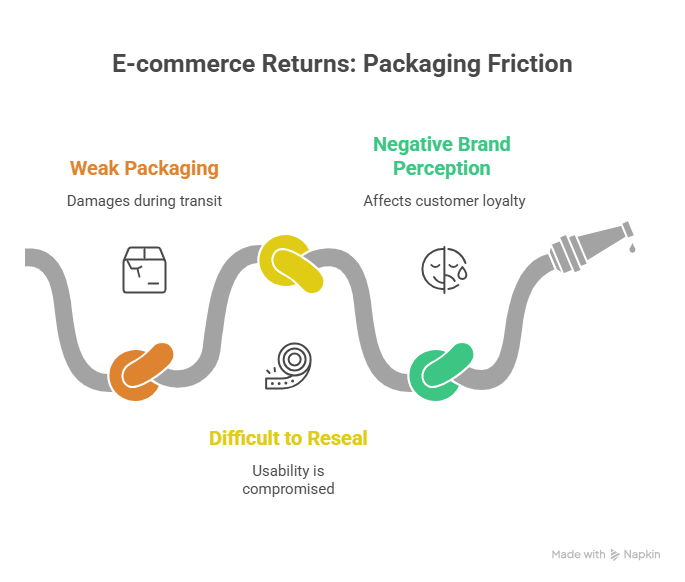
Getting returns is a normal part of running an e-commerce business. Weak or easy-to-damage packaging causes friction with the user. The customer might not be able to put the box back together easily, or they may end up damaging it, which would make the packaging unusable again.
This experience affects how customers feel about the brand, even if the return process is otherwise smooth. Reusable or easy-to-reseal packaging improves the return experience.
Final Thoughts
Packaging mistakes aren’t always dramatic or easy to see. It can start with one damaged box, a single oversized shipment, or even one frustrating unboxing. Over time, these moments add up and cause greater losses.
Repeat customers expect reliability. They want packaging that protects the product, saves their time, and reflects the brand’s values.

James Clark
James is a senior editor, expert in the packaging industry. With a keen eye for detail and industry expertise, he crafts engaging narratives that explore the latest trends and innovations in packaging design and sustainability.