
How to Choose the Right Packaging for High-Value Sports Cards
Are you a high value sports card collector? Then you would know that keeping those high-end cards safe and protected is not an option but a requirement. Picking the right packaging for your cards adds up to its long-term value. Even a rare card can lose its appeal quickly if it shows edge wear, surface scratches, or warping from poor storage. But if you use the right packaging, it’ll keep the card safe and presentable for as long as you want it to.
In this guide we’ll go over everything you need to know, from Sports Card Boxes and their packaging material to dimensions and uses, to keep your cards in their best shape.
Start With the Card Itself
The first step is to assess the details of your card. Take some time and really look into the making of the card. Check things like its thickness, its surface finish, and if it has any specific patches or autographs that need to be highlighted.
Check these basics first:
- Card thickness in points
- Surface finish like chrome, matte, or foil
- Edges and corners condition
- Added elements like autographs or patches
For high quality cards you’d always want to opt for packaging that secures the card without bending it or leaving any room for it to move about. If it’s too tight it can leave surface marks on the card but if it’s got too much space, it can leave room for the corners to bend.
Use Sleeves as the First Layer
Card sleeves are going to be your first investment. These are your cards first line of defense against scratches, fingerprints, and dust. Always try to use high-quality sleeves made from archival-safe polypropylene. Try to avoid sleeves that feel cloudy or stiff since they often contain additives that can affect the card surface over time.
When you’re putting the card into the sleeve, do it gently without forcing it. If you feel resistance, then the sleeve is most likely too small for the card’s dimensions. Don’t use trimmed or damaged sleeves for any valuable cards.
Choose a Rigid Holder That Fits the Card
After you’re done sleeving, your card needs rigid protection. This is where most collectors focus, and for good reason. Rigid holders or sports card packaging protect against all sorts of bending, pressure, and impact.
High end sports card boxes options include:
- Top loaders for general storage and transport
- Semi-rigid holders for grading submissions
- One-touch magnetic cases for display and premium storage
Rigid holders come in different thickness ratings. The key to getting the right rigid holder is to measure your cards as accurately as possible.
For very high-value cards you can use magnetic cases. They offer excellent protection and visual appeal. They also reduce handling since the card can be viewed without removal.
Think About Long-Term Storage Conditions
Heat, humidity, and light exposure are all elements that affect cards over time. Your packaging will work best when it’s paired with the right environment.
For long-term storage:
- Keep cards in a cool, dry place
- Avoid direct sunlight
- Use silica packs in storage boxes
- Store cards vertically when possible
Some collectors add an outer sleeve or team bag around rigid holders. This adds dust protection and keeps cases from scratching each other during storage.
Presenting High-Value Cards
High-value cards sold or photographed at high rates. Packaging plays a big role here. If you have a clean, clear card holder then it’ll instantly form a good first impression.
Scratched holders, cloudy plastic, or mismatched packaging can end up lowering the card’s perceived value. Even if the card is perfect, its presentation can end up knocking down its value.
If you plan to sell or display a card:
- Use clear holders with minimal distortion
- Avoid yellowed or worn plastic
- Clean holders gently before display
- Use consistent packaging across a collection
Avoid Overhandling and Constant Repacking
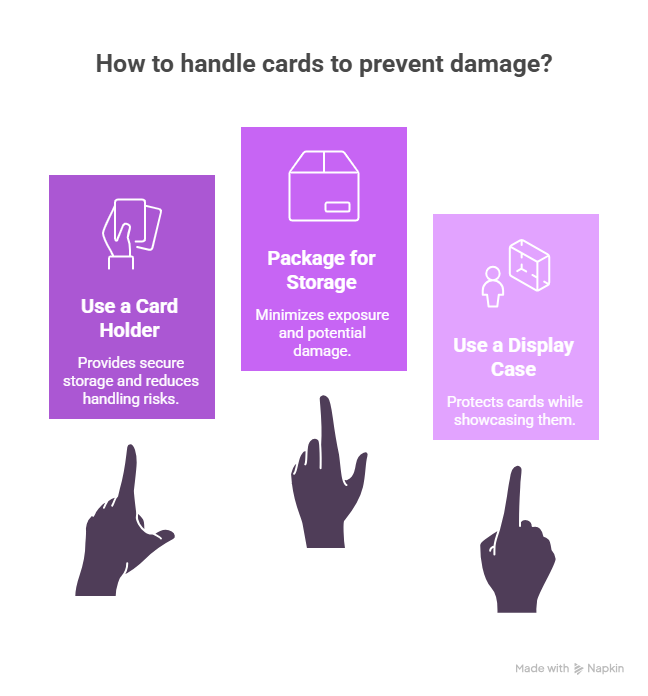
Try not to repeatedly remove and reinsert the cards since it increases risks of damage. Each movement creates a chance for edge wear, surface contact, or accidental drops. Pick a card holder that fulfills your needs to a T.
If a card is meant for storage, package it once and leave it alone. If it is meant for display, choose a case designed for that use. Don’t keep taking it out and repackaging it constantly.
Do Not Ignore Packaging Materials
Not all plastics used in these holders are high quality. Use archival-safe materials if you need long-term storage. Try to steer clear of PVC-based plastics as they can release chemicals that damage cards over time.
Look for packaging labeled as:
- Archival safe
- Acid free
- PVC free
Build a System, Not Random Choices
A consistent packaging system saves time and keeps your collection organized. Decide what packaging you use for different card types and stick to it. This makes storage easier and reduces handling mistakes.
For example:
- All base high-value cards use one type of holder
- Thick cards use a specific size case
- Display cards use magnetic cases
- Storage cards stay in top loaders inside boxes
Consistency also improves presentation if you ever showcase or sell multiple cards.
Final Thoughts
Choosing the right sports card boxes is very important for collectors and card resellers. High-value cards deserve thoughtful protection that matches their condition, materials, and future plans. All you need is the right fit, quality materials, and a clear purpose. Keep your cards in top shape and retain its value!
FAQs:
1. Why is specialized packaging important for valuable sports cards?
Proper packaging protects cards from moisture, bending, UV exposure, and physical damage, preserving their condition and value.
2. What are the best protective layers for sports cards?
Use penny sleeves, top loaders, semi-rigid holders, or magnetic holders to prevent surface scratches and edge wear.
3. How should high-value cards be packaged for shipping?
Place sleeved cards in rigid holders, secure between cardboard pads, and ship in a sturdy corrugated box with cushioning.
4. What materials prevent moisture damage?
Moisture-resistant sleeves, silica gel packets, and sealed poly bags help protect cards from humidity.
5. Should expensive cards be stored differently than regular cards?
Yes. High-value cards should be stored in protective holders and kept in climate-controlled environments.
6. What box type is best for premium card collections?
Rigid boxes with foam inserts or custom compartments provide superior protection and an organized presentation.
7. How can packaging enhance the presentation of collectible cards?
Custom printed boxes, velvet inserts, and magnetic closures add a premium feel for collectors and buyers.
8. Is tamper-evident packaging necessary for rare cards?
Yes. Tamper-evident seals and protective cases provide authenticity assurance and buyer confidence.

James Clark
James is a senior editor, expert in the packaging industry. With a keen eye for detail and industry expertise, he crafts engaging narratives that explore the latest trends and innovations in packaging design and sustainability.