
What Is Cardboard Made Of? Materials, Types & Uses Explained
Understanding Cardboard and Its Importance in Packaging
Have you ever gotten a package and thought to yourself, “what is that box made of?” Most people don’t. Usually when we get a package, we open it, flatten the boxes, and move on without giving the cardboard used a second thought. Cardboard is one of the most used materials out there. It’s used in all sorts of packaging, whether it be for a cereal box or a premium or luxury beauty brand.
Cardboard is really important if you’re involved in the retail industry because it sits right at the point where your products meet the real world A good product package has to be strong enough to protect what is inside, flexible enough to be shaped and folded easily without creasing, and practical enough to move easily through warehouses, trucks, and doorsteps. And cardboard ticks all these boxes. Pun intended.
Once you understand what cardboard is and how it is made, it becomes easier to see why it works so well and why choosing the right type actually makes a difference.
What Is Cardboard Made Out Of?
So let’s start with the question most people ask first.
What is cardboard made of?
At its most basic level, cardboard is made from paper fibers. Those fibers are pressed together in layers to create a material that is thicker and stronger than everyday paper. The key ingredient behind those fibers is cellulose, which usually comes from wood.
Raw Materials Used in Cardboard Manufacturing
Most cardboard begins with trees, especially softwood trees like pine and spruce. These trees have long and flexible fibers that bond together extremely well and give cardboard its strength and structure.
Other types of cardboard include the type made from recycled paper. A large amount of everyday cardboard is recycled by collecting old boxes, office paper, newspapers, etc., cleaning them up, and then breaking them down so their fibers can be reused.
One of the main elements to make either type of cardboard is water. It helps turn wood or recycled paper into pulp so the fibers can be reshaped. There are also cases where natural starches are added to that pulp to help layers stick together. This is more commonly done when producing corrugated cardboard.
How Paper Pulp Is Turned into Cardboard Sheets
Like we’ve said before, the fibers are mixed in water to form a thick pulp that looks more like a grainy soup than paper. That pulp is then spread across large screens where most of the water drains away. As the water starts to drip down the sheets, the fibers naturally start clinging to one another to form thick, wet sheets.
From there the wet sheets are moved through presses and heated rollers. This helps remove the remaining moisture and compress the fibers into a solid, flat sheet. If the requirement is a thicker cardboard, then a few sheets are stacked up and pressed together.
By the time the sheet is fully dried, it is strong enough to be cut, folded, or shaped into packaging. This process is the foundation behind almost every cardboard product you see.
So, What Is It Made Of And Where Does Cardboard Come From?
We’ve already figured out the materials used in the making of cardboard: tree fiber or recycled paper and water along with natural starches.
But where does the material come from?
Natural vs Recycled Materials in Cardboard
Virgin cardboard is made from freshly processed wood pulp. It’s usually smoother, stronger, and more consistent in color and texture. This makes it an excellent pick for the type of packaging where appearance is a big deal, such as retail boxes or printed cartons.
Recycled cardboard uses fibers that have already been through the paper cycle at least once. This makes the fibers slightly shorter, which means they are not quite as strong as virgin fibers, but they are still more than capable for shipping and protective packaging.
However, they have their own plus points. Using recycled materials helps reduce landfill waste and lowers the demand for new raw materials. That is why recycled content has become such an important part of modern cardboard production.
What Is Cardboard Made From in Modern Production?
Most cardboard today is made using a blend of virgin and recycled fibers. This helps manufacturers balance durability, cost, and sustainability factors.
This blended approach is also one of the main reasons why cardboard continues to work so well across different industries. The blending helps cardboard adapt to different product packaging types without losing its core strength.
Types of Cardboard
Now that we’ve figured out the process of making cardboard, let’s come down to the different variations available. Ever thought of how many types of cardboard exist? The answer is more than most people expect.
Solid Paperboard
Solid paperboard is made from a single thick layer of compressed paper fibers. It has a smooth surface and is easy to print on, which is why it is commonly used for retail packaging.
You’ll get to see solid paperboard in cereal boxes, cosmetic packaging, pharmaceutical cartons, and many consumer goods. It works best when products are lightweight and presentation is important.
Chipboard
Chipboard, on the other hand, is usually made from recycled paper. It is thicker and denser than paperboard but does not offer the same strength as corrugated cardboard (we’ll discuss this one below).
It is most often used for notebook backs, book covers, puzzle boards, and lightweight packaging. Chipboard is practical and affordable for items that do not need heavy protection.
Fiberboard
Fiberboard covers a wider range of thicknesses and strengths than the above two options. iT has different grades to it.
- Light grades are used for small cartons and display packaging.
- Medium grades provide more support for heavier items.
- Heavy fiberboard is used for industrial packaging where durability matters.
Choosing the right grade depends on how the packaging will be handled and how much weight it needs to support.
What is Corrugated Cardboard?
Let’s round back to a type we mentioned before: corrugated cardboard. So what is corrugated cardboard, exactly?
It is a layered form of cardboard designed specifically to protect products during shipping and storage. If you have ever received a shipping box, you have already handled corrugated cardboard.
Structure of Corrugated Cardboard
There are three main layers that make up corrugated cardboard. There are two flat outer sheets called liners, which encase a wavy inner layer known as fluting.
The wavy layer creates air pockets within this structure, which act as cushioning. These pockets help absorb impact and resist pressure. Making the material surprisingly strong for its weight and helping in protecting the products that will be placed inside it.
How Corrugated Cardboard Is Made
The process of producing corrugated cardboard is a little different from the other types. To create corrugated cardboard, paper is fed through heated rollers that form the wave pattern. Then the liner and fluting sheets are layered up and bonded together with adhesive.
Once bonded, the material is cut into sheets or shaped into boxes. Manufacturers can adjust the size of the flutes and the thickness of the liners to meet different packaging needs.
Single-Wall, Double-Wall, and Triple-Wall Corrugated Cardboard
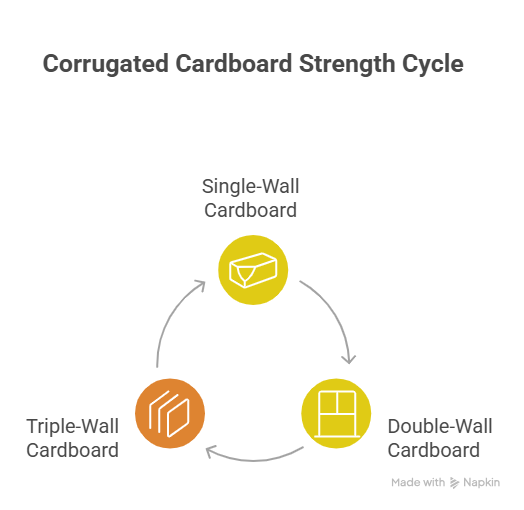
- Single-wall corrugated cardboard has one fluted layer and is used for most everyday shipping boxes.
- Double-wall corrugated cardboard includes two fluted layers and provides extra strength for heavier or fragile items.
- Triple-wall corrugated cardboard is used for very heavy products or industrial equipment where maximum protection is required.
Benefits of Corrugated Cardboard
Corrugated cardboard has become the standard for shipping and logistics for several reasons.
Strength, Durability, and Protection
The layered structure helps protect items from impact, vibration, and stacking pressure. This is really important during shipping, when boxes may be moved many times before reaching their destination.
Cost Effectiveness for Packaging
Corrugated cardboard is lightweight and easy to produce. It can be customized to fit any product and helps reduce wasted space while also lowering shipping costs.
Environmental Benefits of Corrugated Cardboard
Most modern corrugated cardboard is recyclable and made using recycled fibers. It breaks down naturally over time and fits right into sustainable packaging efforts.
What Is Waxed Cardboard?
Waxed cardboard is another type of cardboard. It’s a more specialized material designed for environments where moisture is a packaging concern.
How Waxed Cardboard Is Different from Regular Cardboard
This type cardboard is coated with a thin layer of wax that helps repel water. The coating stops the cardboard from absorbing any moisture and losing its strength.
Uses of Waxed Cardboard in Food and Cold Storage
Produce, seafood, and frozen food packaging is all made from waxed cardboard because it holds up better in cold and damp conditions where standard cardboard might sog up.
Is Waxed Cardboard Recyclable?
Traditional options are a bit tough to recycle because the wax interferes with the pulping process. There are newer alternatives that use easier-to-process coatings, however their recyclability still depends on local facilities.
Cardboard vs Corrugated Cardboard
Let’s dive into the difference between these two most commonly used packaging materials.
Key Differences in Structure and Use
Standard cardboard, also commonly called paperboard or chipboard, is best suited for lightweight packaging and retail presentation.
Corrugated cardboard, on the other hand, is used when your packaging has to be strong enough to hold its shape through things like shipping and storage.
Which Type of Cardboard Is Best for Packaging?
The best option depends on the type of product you have, how heavy it is, and how far it needs to be shipped.
How Cardboard Is Used in Packaging Industries
Cardboard is one of the most common and widely used materials for a lot of industries. Here’s how it’s used:
Retail and E-Commerce Packaging
Both corrugated cardboard and paperboard are used in e-commerce product packaging as they need to be safely shipped to customers globally.
Food and Beverage Packaging
Like we said before, waxed cardboard is one of the most used cardboard packaging types in the food and beverage industry.
Industrial and Shipping Applications
Industrial machinery, parts, and bulk shipments hold a lot of weight and require packaging that would easily be able to bear that load. This is why heavy duty corrugated cardboard is the most widely used material here.
Is Cardboard Eco-Friendly?
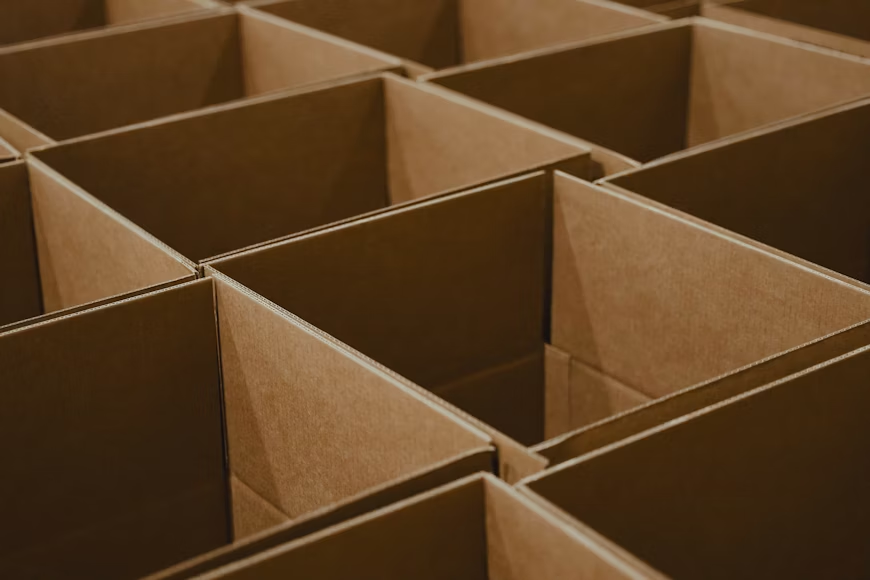
Cardboard is one of the most environmentally responsible packaging options out there. Many brands opt for cardboard packaging because it is not only lucrative to produce but also easy to dispose of.
Sustainability and Recycling Process
It is one of the most used and recycled materials worldwide. Its fibers can be reused several times before they break down, which reduces the need for new raw materials.
How Cardboard Supports Eco-Friendly Packaging Goals
By choosing cardboard, many businesses reduce plastic use and support recycling systems. This makes cardboard in especially good pick for sustainability-focused packaging and markets.
Common Myths About Cardboard
Like all things, cardboard is surrounded by some misconceptions that are worth clearing up. Let’s get into it:
Is Cardboard Always Recyclable?
Most cardboard is recyclable, but food residue, wax coatings, and heavy contamination can affect recyclability.
Does Thicker Cardboard Mean Stronger Packaging?
Thickness isn’t the only thing that decides cardboard’s strength. Its structure, fiber quality, and how the layers are bonded together all add to it.
How to Choose the Right Cardboard for Your Packaging Needs
With the different types sorted, let’s now figure out what the best cardboard type for your product packaging is.
Factors to Consider: Weight, Moisture, and Shipping
Take into account how heavy your product is, if it will be exposed to moisture, and how far it needs to travel. This will help you pick the perfect material fit.
Custom Cardboard Packaging Options
If youre a business looking to get product packaging, then you should opt for custom packaging. If you’re a business looking to get product packaging, then you should opt for custom packaging. You can work with experienced companies like Blue Box Packaging to help get not only the best material but also the most precise measurements and printing options.
FAQs About Cardboard
What Is Cardboard Made Of?
Cardboard is made from cellulose fibers derived from wood pulp or recycled paper, combined with water and natural adhesives.
What Is Corrugated Cardboard Used For?
Corrugated cardboard is used for shipping boxes, storage containers, and protective packaging.
What Is Waxed Cardboard Best For?
Waxed cardboard is best for food packaging, cold storage, and moisture-heavy environments.
Final Thoughts
Cardboard is a key part of how products are stored, shipped, and presented around the world. Knowing how it is made and which types work best will help your business choose packaging that performs well and stands out.
If you are planning custom packaging, working with an experienced partner makes the process easier. BlueBoxPackaging can help you select the right cardboard and equip you with everything you need for the best custom packaging for your products.

James Clark
James is a senior editor, expert in the packaging industry. With a keen eye for detail and industry expertise, he crafts engaging narratives that explore the latest trends and innovations in packaging design and sustainability.