
Which Soft Touch Finish Is Right for You? Coating vs Lamination Explained
How your packaging feels in the consumer’s hand is one of those tiny, almost ignorable things that quietly shapes how people judge a product. The texture of the box is the first thing that sets the quality standard in your customers’ minds before they even get to the actual product itself.
Nowadays, soft-touch finishes have become popular because they instantly make packaging feel warm, modern, and premium. All sorts of brands are seen using them when they want to give their merchandise a smoother and more refined look without going overboard.
The difficult bit is choosing between soft-touch coating and soft-touch lamination. The two packaging types might seem similar on the surface, but they behave very differently once you start using them. In this article, we’ll discuss the differences between the two and figure out which one works best for you. Let’s dive in!
What Soft Touch Really Means
Before we talk about coating and lamination, let’s clarify what soft touch itself is. Have you ever felt the soft, velvety finish of high-end or premium product packaging? That is soft touch.
Soft touch is a finishing method that creates a smooth, matte surface on printed paperboard. Instead of a shiny or slick feel, it gives packaging a velvety, almost fabric-like texture that feels warm in your hands. It also softens the appearance of any art or typography done on the packaging by reducing shine. This helps the design look more refined and your product more high-end.
Soft touch printing has two types: lamination and coating. Both of them create the same soft-touch texture, but the method behind each one can affect the packaging’s durability, color, cost, and production time. That is where the real differences show up.
Soft Touch Coating
Soft-touch coating is the simpler of the two options. It’s applied as a liquid on top of the paperboard during the printing phase. After printing, it’s cured so that the finish is smooth and even. No additional steps or materials are needed to make this soft-touch packaging, which makes it the more efficient option.
How It Looks and Feels
Like discussed before, soft-touch coating gives a matte, velvety finish that keeps the printed paperboard’s colors crisp and accurate. If your packaging design has clean lines, bright shades, or subtle sort of gradients, soft-touch coating can help keep them intact. The texture of the printed coating feels smooth but not overly thick.
Where It Performs Well
Soft-touch coating is best for packaging that stays in controlled environments. You’ll usually see them on retail shelves, displays, or printed pieces that need to be handled gently. It is also a great option when the artwork needs to stay vibrant. Since it is applied like ink, it does not mute colors or dim any of your packaging’s design details.
Things to Keep in Mind
Soft-touch coating is not the strongest option when it comes to moisture or rough handling. If a box goes through shipping, heavy stacking, or constant touching, the coating can pick up scratches, especially on darker designs. It is durable for everyday use, but it is not built for harsher conditions. If your packaging needs to survive travel or lots of handling, make sure you have it properly wrapped in protective materials.
Soft Touch Lamination
Now, let’s discuss what is soft touch lamination. Soft touch lamination takes a different approach from soft touch coating. Instead of applying a liquid coating, a thin BOPP film is bonded to the printed surface. This film adds a physical layer of protection while still giving you the same velvety feel.
How It Looks and Feels
Lamination gives a plush, slightly cushioned texture that feels thicker than coating. It creates a soft matte look that gently tones down the artwork. The packaging colors do appear a little muted, especially deeper tones. This can be a good thing if you want a more subtle, moody, or luxury-focused look.
Where It Performs Well
Soft-touch lamination is ideal when durability is a priority. The film protects against scratches, rubbing, humidity, and general wear. It also keeps the edges of the packaging from curling. This makes it suitable for boxes that are handled often, opened repeatedly, or used in environments where moisture is a concern. If your packaging needs to survive shipping or constant contact, lamination holds up better than coating.
Things to Keep in Mind
Lamination costs more than coating because it requires extra materials and an additional production step.
The look it creates is beautiful, but it can shift the tone of your artwork. If your design relies heavily on bright colors, lamination may soften them more than you want.
Recycling can also be tougher because the film adds another layer to the material.
Coating vs Lamination: What Fits You Best
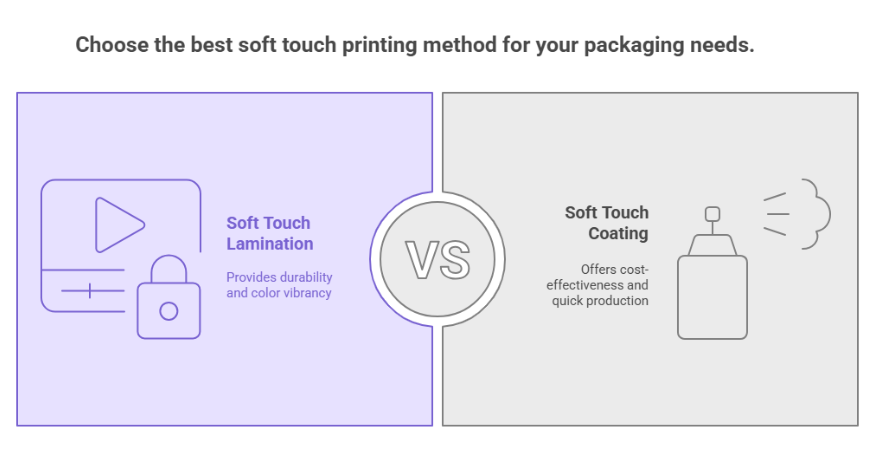
Once you understand how each method works, the choice comes down to a few key factors: durability, appearance, cost, sustainability, and texture.
Durability
Lamination is noticeably stronger. It protects against moisture, pressure, and constant handling. Coating is durable enough for standard use but not for heavy transport or high-touch situations.
Appearance
Coating keeps the artwork clean and vibrant. Lamination softens the visual tone and creates a muted, premium feel. Your decision depends on the personality of your design.
Cost
Coating is more budget-friendly since it is part of the printing stage. Lamination sits in a higher price range because of the film and extra process.
Sustainability
Coating is easier to recycle because it behaves like ink. Lamination introduces a plastic layer, which complicates recycling. If sustainability is a priority, coating aligns better with that direction.
Texture
Both finishes feel soft, but lamination is thicker and more cushioned. Coating feels lighter and slightly more natural to the touch.
How to Choose the Finish That Works for You
To choose confidently, think about how your packaging will actually be used and what your brand wants to communicate.
1. Look at How Your Packaging Will Be Handled
If your packaging stays on shelves, goes in gift sets, or stays indoors, coating is usually enough. If it needs to survive shipping, frequent handling, or humid environments, lamination offers stronger protection.
2. Consider Your Artwork
If your design depends on bright or crisp colors, coating keeps them true. If you prefer a soft, muted aesthetic, lamination naturally creates that look without additional treatment.
3. Set a Clear Budget
Coating works well when you want a premium feel without stretching your budget. Lamination is worth the higher cost only when your packaging needs the extra strength.
4. Think About Your Brand Values
If sustainability is important to your brand, coating fits more easily into recycled material flows. If longevity and durability are the focus, lamination gives you more security.
Final Thoughts
Both soft-touch coating and soft-touch lamination elevate packaging, but they serve different needs. Coating gives you the soft feel without altering the artwork or increasing production too much. Lamination gives you added strength and a more cushioned texture. The right choice depends on how your packaging behaves once it leaves the printer. When you match the finish to your product and the way customers interact with it, the soft-touch effect feels intentional instead of decorative.
If you want packaging that feels thoughtful, looks professional, and fits your product perfectly, partner with a team that actually understands how structure, usability, and brand expression work together. BlueBox Packaging is just the team for it. Contact us today and get custom packaging that looks good, ships safely, and supports your brand story from start to finish.

James Clark
James is a senior editor, expert in the packaging industry. With a keen eye for detail and industry expertise, he crafts engaging narratives that explore the latest trends and innovations in packaging design and sustainability.