
How To Pack A Pack Of Cigarettes: A Step-by-Step Guide (2026)
Packing a cigarette pack may seem like a straightforward process, but there’s much more to it than simply placing cigarettes inside a box. Every modern pack of cigarettes is carefully designed to protect the product, preserve freshness, meet legal requirements, and create a consistent customer experience. From the inner foil wrap to the outer carton, each component serves a specific purpose.
Whether you’re a packaging manufacturer, tobacco retailer, or simply curious about the process, understanding how to pack a pack of cigarettes offers valuable insight into one of the world’s most precisely engineered packaging systems.
In this guide, we’ll walk you through each step of the packing process, explain the materials used, and highlight the common mistakes to avoid.
Why Proper Cigarette Packaging Matters
A well-designed cigarette pack does much more than hold cigarettes together. It protects the product throughout transportation, keeps tobacco fresh, and ensures compliance with packaging regulations.
High-quality cigarette packaging helps:
- Protect cigarettes from breaking
- Preserve freshness and flavor
- Prevent moisture and dust contamination
- Display mandatory health warnings
- Improve shelf presentation
- Strengthen brand recognition
- Make storage and transportation easier
Without proper packaging, cigarettes can become damaged or lose their freshness long before reaching the consumer.
Materials Used in Cigarette Packaging
Cigarettes
The finished cigarettes are inspected for quality before packaging begins.
Foil Inner Wrap
A thin aluminum or laminated foil wrap surrounds the cigarettes to lock in freshness and reduce exposure to air.
Inner Frame
Many premium cigarette packaging boxes include a paperboard frame that reinforces the pack and helps maintain its shape after opening.
Outer Paperboard Box
The outer custom cigarette boxes are typically made from durable paperboard that protects the cigarettes while providing space for branding, product information, and required warnings.
Cellophane Wrap
A transparent outer film seals the package, protects it from dust and moisture, and provides evidence of tampering.
Tear Tape
A narrow strip beneath the cellophane allows consumers to open the pack cleanly.
Step-by-Step Guide: How to Pack a Pack of Cigarettes
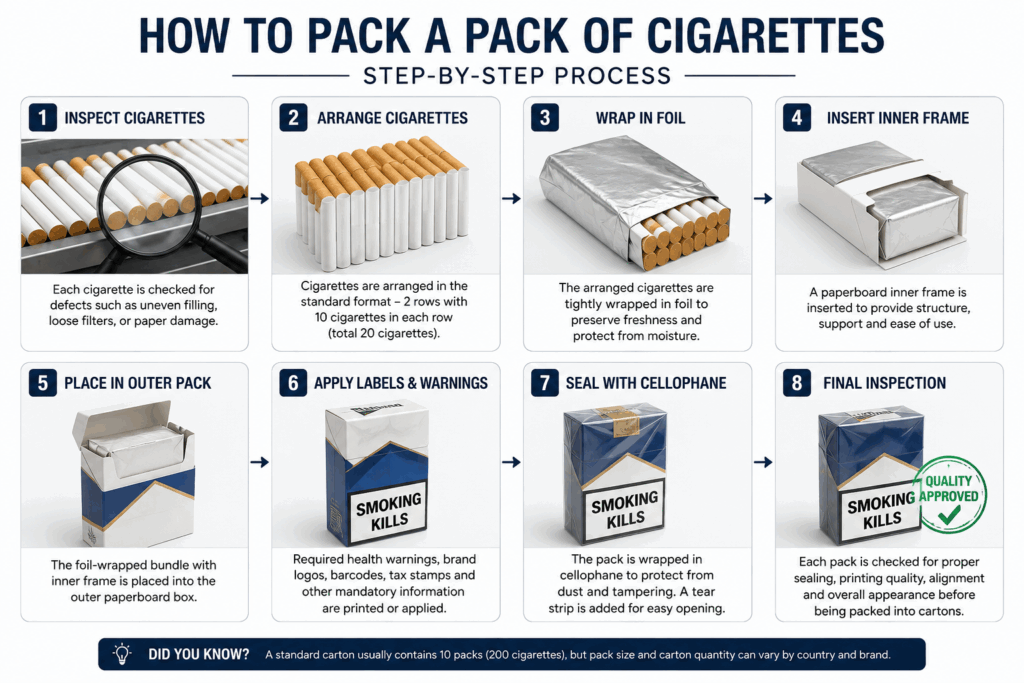
Step 1: Inspect Every Cigarette
Before packaging starts, each cigarette undergoes a quality inspection.
Manufacturers check for:
- Uniform length
- Proper tobacco filling
- Secure filter attachment
- Smooth cigarette paper
- Consistent weight
Any defective cigarettes are removed before the packing process begins.
Step 2: Arrange the Cigarettes
After inspection, the cigarettes are arranged into their standard configuration.
The most common layout includes:
- Two rows
- Ten cigarettes in each row
- A total of 20 cigarettes per pack
However, not every pack of cigarettes contains 20 cigarettes. Depending on the country and local regulations, manufacturers also produce packs containing 10, 14, 18, 25, or more cigarettes.
If you’re wondering why these sizes vary or how many packs are included in a carton, check out our guide “How Many Cigarettes in a Pack? A Complete Guide About Sizes.“ It explains standard cigarette counts, global pack sizes, and carton quantities in detail, making it the perfect companion to this guide.
Step 3: Wrap the Cigarettes in Foil
Once arranged, the cigarettes are tightly wrapped in a foil liner.
This important layer helps:
- Preserve freshness
- Maintain moisture levels
- Protect tobacco from air exposure
- Reduce flavor loss
- Prevent the cigarettes from drying out
Without the foil wrap, the cigarette quality deteriorates much faster.
Step 4: Insert the Inner Frame
Premium cigarette boxes often include an inner paperboard frame.
This frame helps:
- Strengthen the pack
- Support the opening
- Prevent crushing
- Make cigarette removal easier
- Improve the overall customer experience
Although it’s a small component, it significantly increases the durability of the package.
Step 5: Place Everything Inside the Outer Box
The foil-wrapped cigarette bundle is then inserted into the outer custom cigarette packaging.
Packaging equipment ensures:
- Perfect alignment
- Accurate dimensions
- Clean folds
- Secure positioning
- Smooth opening and closing
Precision is essential because even slight misalignment can affect both appearance and functionality.
Step 6: Apply Required Labels and Health Warnings
Before the pack is sealed, manufacturers print or apply all legally required information.
This may include:
- Graphic health warnings
- Government-mandated warning statements
- Product identification
- Manufacturing details
- Tax stamps
- Batch codes
- Barcodes
These requirements vary from country to country, making regulatory compliance an essential part of cigarette packaging.
Step 7: Seal with Cellophane
The completed pack is wrapped in transparent cellophane.
This outer layer:
- Protects against dust
- Prevents tampering
- Keeps the pack clean
- Improves shelf presentation
- Provides additional moisture protection
The tear tape is embedded beneath the film to allow easy opening.
Step 8: Final Quality Inspection
Every finished pack of cigarettes goes through one final inspection before shipping.
Inspectors verify:
- Proper sealing
- Correct printing
- Accurate warning labels
- Barcode readability
- Undamaged corners
- Consistent dimensions
Only packs that pass every quality check move on to distribution.
How Cigarette Packs Are Packed into Cartons
After individual packs are completed, they are grouped into larger cartons for shipping and retail distribution.
A standard carton typically contains:
- 10 cigarette packs
- 200 cigarettes in total
The cartons are then sealed, labeled, and prepared for transportation to wholesalers and retailers.
Common Mistakes When Packing Cigarettes
Even small packaging errors can affect product quality and customer satisfaction.
Loose Cigarette Arrangement
Poor alignment allows cigarettes to shift inside the pack, increasing the risk of breakage.
Improper Foil Wrapping
Loose foil exposes the tobacco to air, causing it to lose freshness more quickly.
Weak Outer Packaging
Low-quality cigarette packaging boxes are more likely to crush during transportation and storage.
Incorrect Warning Labels
Misplaced or missing health warnings can result in regulatory issues in many markets.
Poor Cellophane Sealing
Improper sealing increases the risk of contamination and makes tampering easier.
What Makes Premium Custom Cigarette Packaging?
Modern custom cigarette packaging is designed to protect the product while enhancing its appearance.
Premium features often include:
- Durable paperboard construction
- High-resolution printing
- Soft-touch finishes
- Foil stamping
- Embossing and debossing
- UV coating
- Scratch-resistant finishes
- Tamper-evident seals
- Sustainable materials
Final Thoughts
Understanding how to pack a pack of cigarettes highlights the precision involved in modern cigarette packaging. Every step – from inspecting individual cigarettes and arranging them correctly to wrapping them in foil, inserting them into durable custom cigarette boxes, and sealing them with cellophane – plays a vital role in protecting product quality and ensuring compliance with industry standards.
Whether you’re involved in packaging, retail, or simply researching the manufacturing process, knowing how a pack of cigarettes is assembled provides valuable insight into why quality packaging matters.
FAQs
How many cigarettes are in a standard pack?
Most packs of cigarettes contain 20 cigarettes, although some countries also sell packs with 10, 14, 18, or 25 cigarettes.
Why are cigarettes wrapped in foil?
Foil helps preserve freshness, maintain moisture, and protect the tobacco from exposure to air.
Why is cellophane used on cigarette packs?
Cellophane protects the pack from dust and moisture while providing tamper evidence and improving shelf appearance.
Are cigarette packs recyclable?
The paperboard portion is usually recyclable, while the foil liner and plastic overwrap depend on local recycling facilities.
How are cigarette packs produced so quickly?
Modern automated packaging machines inspect, wrap, assemble, seal, and label hundreds of cigarette packs every minute with remarkable precision.

James Clark
James is a senior editor, expert in the packaging industry. With a keen eye for detail and industry expertise, he crafts engaging narratives that explore the latest trends and innovations in packaging design and sustainability.