
What Is Sustainable Packaging? And Why Does It Matter to Your Business?
Packaging is no longer just about putting a product in a box, bag, or container. Today’s customers pay attention to what happens to packaging after they open their purchase. Is it recyclable? Can it be reused? Is it made from responsibly sourced materials? Or does it immediately end up in the trash?
This growing awareness has made sustainable packaging an important part of modern business strategy. From small e-commerce brands to established retailers, companies are rethinking how they package, ship, and present their products.
But what exactly is sustainable packaging, and does switching to more environmentally responsible packaging actually benefit your business?
In this guide, we’ll explore what sustainable packaging solutions are, the materials and practices involved, and why investing in greener packaging can make a meaningful difference for your brand.
What Is Sustainable Packaging?
Sustainable packaging refers to packaging designed to reduce its environmental impact throughout its lifecycle. This includes the materials used, the amount of energy required for production, how efficiently the packaging can be transported, and what happens to it after the customer is finished with it.
In simple terms, sustainable packaging aims to use resources more responsibly while still providing the protection, functionality, and visual appeal a product needs.
A package may be considered more sustainable when it is:
- Made from recyclable packaging materials
- Created using recycled or responsibly sourced content
- Designed for reuse
- Easy to recycle through appropriate waste streams
- Compostable under suitable conditions
- Lightweight and material-efficient
- Durable enough to reduce product damage during shipping
- Designed to minimize unnecessary components
Why Is Sustainable Packaging Becoming So Important?
Consumer expectations are changing. More shoppers now consider packaging waste and environmental impact when evaluating the brands they support.
At the same time, businesses are facing increasing pressure to reduce unnecessary materials, improve recycling practices, and develop more responsible supply chains. This has created a major shift in the packaging industry.
Brands are moving away from excessive layers of plastic, oversized shipping boxes, and difficult-to-recycle packaging components. Instead, many are exploring recyclable packaging, biodegradable packaging, recycled paperboard, kraft materials, and reusable packaging systems.
The rise of e-commerce has also played a major role. Every online order requires some form of protective packaging. When businesses ship thousands of orders each year, even small changes in material usage can significantly reduce packaging consumption.
The Key Characteristics of Sustainable Packaging
Not every package labeled as “green” or “eco-friendly” delivers the same environmental benefits. A genuinely responsible approach looks at several factors.
Uses Materials More Efficiently
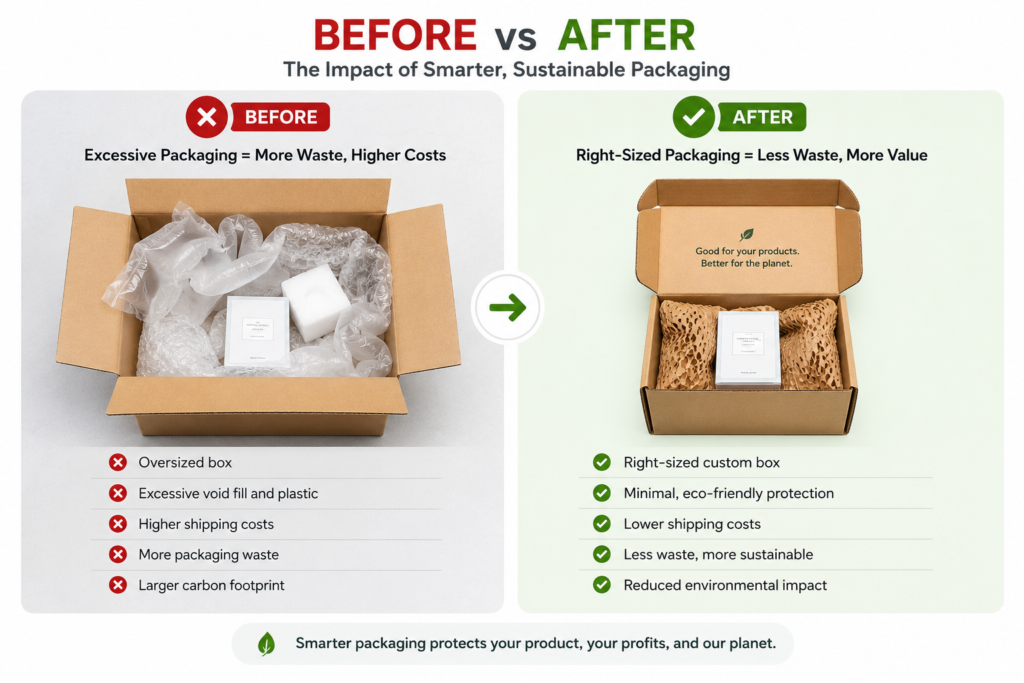
One of the simplest ways to improve packaging sustainability is to use less material. Oversized boxes, unnecessary inserts, and excessive layers can increase waste and shipping costs without adding real value.
Minimalist packaging focuses on using only the materials necessary to protect and present the product. A properly sized box can reduce material consumption while also improving shipping efficiency. This is particularly important for e-commerce packaging, where dimensional weight and shipping space can directly affect fulfillment costs.
Supports Recycling and Reuse
Recyclable packaging is one of the most common approaches to sustainable design. Materials such as cardboard, paperboard, and certain plastics can potentially be recovered and reused when appropriate recycling systems are available.
However, packaging design matters. A package made from recyclable materials can become harder to recycle if it combines multiple materials that are difficult to separate. For example, excessive laminations, mixed components, or permanent attachments can complicate the recycling process.
That is why design for recyclability is becoming an important part of modern packaging development.
Incorporates Recycled or Renewable Materials
Another important approach is using materials that reduce reliance on virgin resources. Recycled packaging materials, such as recycled cardboard and paperboard, can help support a circular approach to material use. Responsibly sourced renewable materials can also be part of a broader sustainability strategy.
For many brands, kraft packaging has become a popular option because of its natural appearance, versatility, and compatibility with a range of packaging applications.
Considers the Full Packaging Lifecycle
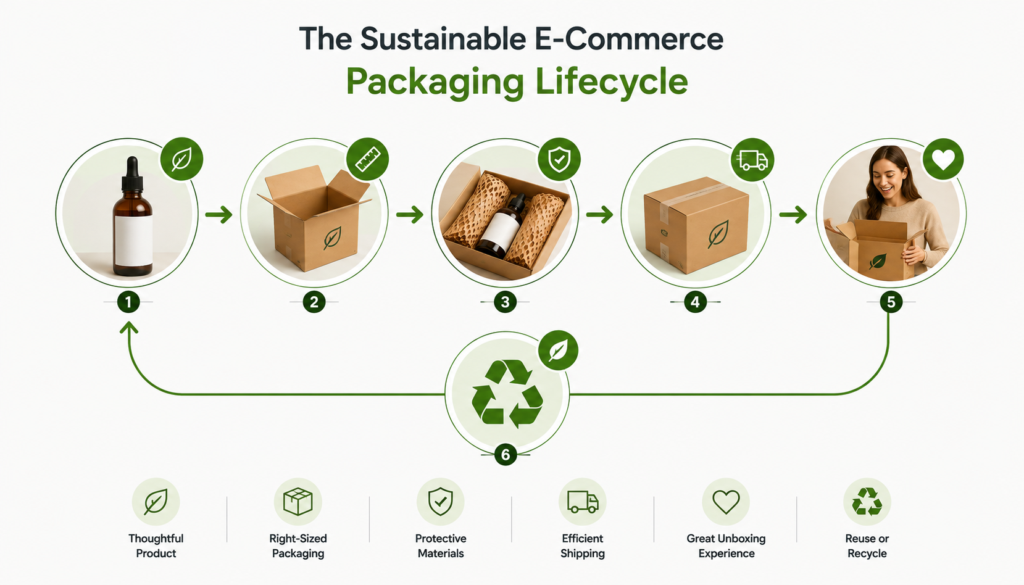
A truly thoughtful packaging strategy considers what happens before, during, and after the product reaches the customer.
This includes:
- Raw material sourcing
- Manufacturing processes
- Material consumption
- Transportation efficiency
- Product protection
- Customer use
- Reuse opportunities
- Recycling or disposal
This broader perspective is often referred to as a packaging lifecycle approach.
Common Types of Sustainable Packaging Materials
Businesses have more sustainable packaging options than ever before. The right choice depends on your product, shipping requirements, budget, and branding goals.
Cardboard and Paperboard
Cardboard and paperboard are widely used across retail, food, cosmetics, electronics, apparel, and e-commerce industries.
Cardboard packaging can provide durability and customization opportunities while supporting material recovery systems.
Custom printed paperboard boxes can also be designed with product-specific dimensions, reducing unnecessary space and excess filler.
Kraft Packaging
Kraft boxes and kraft paper packaging are popular among brands that want a natural, minimal, or environmentally conscious presentation.
Kraft materials can work well for:
- Retail packaging
- Subscription boxes
- Food packaging
- Apparel packaging
- Cosmetic packaging
- Shipping boxes
- Gift packaging
With custom printing, businesses can maintain strong branding while using packaging with a clean and natural aesthetic.
Corrugated Packaging
For shipping and transportation, corrugated boxes remain one of the most practical packaging solutions.
Corrugated materials provide strength and cushioning while offering opportunities for recycled content and material recovery.
Custom-sized corrugated boxes can also help businesses reduce void space and avoid using excessive fillers.
Reusable Packaging
Some products benefit from packaging designed for continued use. Luxury boxes, rigid boxes, storage boxes, and certain specialty containers can provide value beyond the initial purchase.
When customers reuse packaging for storage, gifting, or organization, the useful life of the package can be extended. This approach works particularly well for premium products where the unboxing experience is an important part of the brand.
Compostable and Alternative Materials
Certain businesses are also exploring compostable packaging, plant-based materials, molded fiber, and other alternatives.
However, these options should be selected carefully. Compostability and environmental benefits can depend on the material, available disposal infrastructure, and the conditions required for proper processing.
The best packaging choice is not always the newest material. Sometimes, improving an existing package by reducing its size, simplifying its structure, or increasing recycled content can deliver more practical benefits.
Why Sustainable Packaging Matters to Your Business
Sustainable packaging can benefit more than the environment. When incorporated strategically, it can support branding, customer relationships, operational efficiency, and long-term growth.
1. It Meets Changing Customer Expectations
Customers increasingly expect brands to be more responsible about the materials they use.
Packaging is one of the most visible parts of the customer experience. Unlike a manufacturing process happening behind the scenes, customers physically interact with the box, mailer, bag, or container.
A thoughtfully designed eco-friendly packaging solution can demonstrate that your brand pays attention to details beyond the product itself.
This can be particularly valuable for businesses targeting environmentally conscious consumers.
2. It Can Strengthen Your Brand Image
Packaging communicates your brand before the customer even uses your product.
A clean, minimal, and thoughtfully designed package can reinforce your company’s values and positioning.
For example, a brand focused on natural skincare may choose recyclable paperboard packaging with minimal printing. A premium brand may create a durable, reusable box designed to become part of the customer’s home or workspace.
The key is authenticity. Sustainable branding works best when your packaging choices align with your actual business practices rather than relying on vague environmental claims.
3. It Can Reduce Material and Shipping Costs
Sustainability and cost efficiency are not always opposites.
Reducing unnecessary packaging can lower material usage. Smaller and lighter packages may also improve shipping efficiency.
For example, switching from an oversized shipping box to a properly sized custom packaging box can potentially reduce:
- Packaging material usage
- Void fill requirements
- Warehouse storage space
- Shipping volume
Smart packaging optimization can therefore support both environmental and operational goals.
4. It Can Improve the Customer Experience
Customers notice packaging that is difficult to open, unnecessarily bulky, or immediately destined for the trash.
A well-designed package should be functional, easy to handle, and appropriate for the product.
Adding simple features such as clear recycling instructions, reusable construction, or easy-to-separate components can improve the overall unboxing experience. The best packaging does not force customers to choose between convenience and sustainability.
5. It Can Help Your Business Prepare for Future Changes
Packaging regulations and sustainability requirements continue to evolve in different markets.
While requirements vary by location and industry, businesses that begin evaluating their packaging systems now may be better positioned to adapt to future expectations.
Developing a more efficient packaging strategy can help companies identify unnecessary materials, simplify packaging structures, and build stronger supplier relationships.
In other words, sustainability can be part of future-proofing your packaging operations.
How Sustainable Packaging Can Help E-Commerce Businesses
E-commerce brands face a unique packaging challenge. Products must survive transportation while still creating a positive experience when customers open their orders. This often leads businesses to use large boxes, excessive fillers, and multiple layers of packaging. A more strategic approach can make a major difference.
Sustainable e-commerce packaging can include:
- Right-sized shipping boxes
- Recyclable cardboard mailers
- Paper-based protective materials
- Reduced plastic components
- Custom inserts that minimize product movement
- Lightweight packaging designs
- Reusable branded boxes
Custom sizing is particularly valuable because it helps businesses avoid shipping space.
How to Choose the Right Sustainable Packaging for Your Product
There is no single packaging material that works for every business.
The right solution depends on several factors.
Understand Your Product Requirements
Start by considering:
- Product size and weight
- Fragility
- Shelf life
- Moisture sensitivity
- Shipping distance
- Storage requirements
A glass bottle requires a different packaging strategy than a T-shirt or cosmetic product.
Avoid Over-Packaging
Look for unnecessary layers.
Can the box be smaller? Can two components be combined? Can a plastic insert be replaced with a paper-based alternative where appropriate?
Small design changes can add up when multiplied across hundreds or thousands of units.
Consider the Customer’s Disposal Options
A package is only as sustainable as its practical end-of-life pathway allows.
Whenever possible, consider whether customers can reasonably recycle, reuse, or otherwise dispose of the packaging.
Clear disposal instructions can also help customers understand what to do with different components.
Work With an Experienced Packaging Partner
A packaging supplier can help evaluate material options, box dimensions, structural requirements, and printing choices.
The goal should be to create packaging that supports your sustainability objectives without compromising quality, protection, or brand presentation.
Build a More Responsible Packaging Strategy with BlueBox Packaging
Making the transition toward sustainable packaging does not have to mean completely redesigning your entire packaging system overnight.
Often, the process starts with simple improvements. You might reduce box dimensions, eliminate unnecessary layers, switch to recycled materials, improve shipping efficiency, or redesign a package so it is easier for customers to recycle or reuse.
At BlueBox Packaging, we help businesses explore custom packaging solutions that align with their product requirements, branding goals, and operational needs. Whether you need custom cardboard boxes, kraft packaging, corrugated shipping boxes, or premium packaging designed for reuse, the right structure and materials can make a meaningful difference.
FAQs
1. What is sustainable packaging?
Sustainable packaging is packaging designed to reduce environmental impact by using materials and designs that support recycling, reuse, reduced waste, efficient transportation, and responsible resource use.
2. Why is sustainable packaging important for businesses?
Sustainable packaging can help businesses reduce unnecessary material use, improve shipping efficiency, strengthen brand perception, meet changing customer expectations, and support long-term sustainability goals.
3. What materials are commonly used for sustainable packaging?
Common options include recycled cardboard, paperboard, kraft paper, corrugated packaging, reusable packaging, molded fiber, and certain compostable materials. The best option depends on the product and its packaging requirements.
4. Can sustainable packaging help reduce shipping costs?
Yes. Right-sized and lightweight packaging can reduce excess material, void fill, and shipping volume. Efficient packaging can therefore lower both packaging and transportation costs.
5. Is sustainable packaging suitable for e-commerce businesses?
Yes. Sustainable e-commerce packaging can protect products while reducing unnecessary materials. Options such as right-sized boxes, recyclable mailers, paper-based protection, and reusable packaging can improve efficiency and the customer experience.

James Clark
James is a senior editor, expert in the packaging industry. With a keen eye for detail and industry expertise, he crafts engaging narratives that explore the latest trends and innovations in packaging design and sustainability.